The operating layer running live for owner-led restaurants
Restaurant OS connects sales, labor, payroll, reviews, finance, and menus into one governed command surface — built end-to-end and live with SOI Thai Street Food & Sake Bar.What's inside the pack
Restaurant OS ships with six operating modules. Sprint scope determines which modules go live for your operation — not every workflow is in every deployment.
Sales
POS activity into location-level summaries, channel mix, dish performance, and exceptions.
Labor
Timecards into labor summaries, overtime watch, missing punch queues, and payroll readiness.
Payroll
Weekly readiness into payroll runs, tip allocations, exceptions, and operator approvals.
Reviews
Reviews into insights and drafted responses, with approval routing and publishing.
Finance
Bank activity into a daily heartbeat, unclassified flags, and category routing.
Operator Brief
What changed across the operating layer, and what needs attention next.
Reviews become operating signals, not a dashboard
Reviews from every channel resolve into the same operating objects: topics, dish mentions, sentiment, and the exceptions worth a response. The operator sees what customers are actually saying about each location — not just the star average.
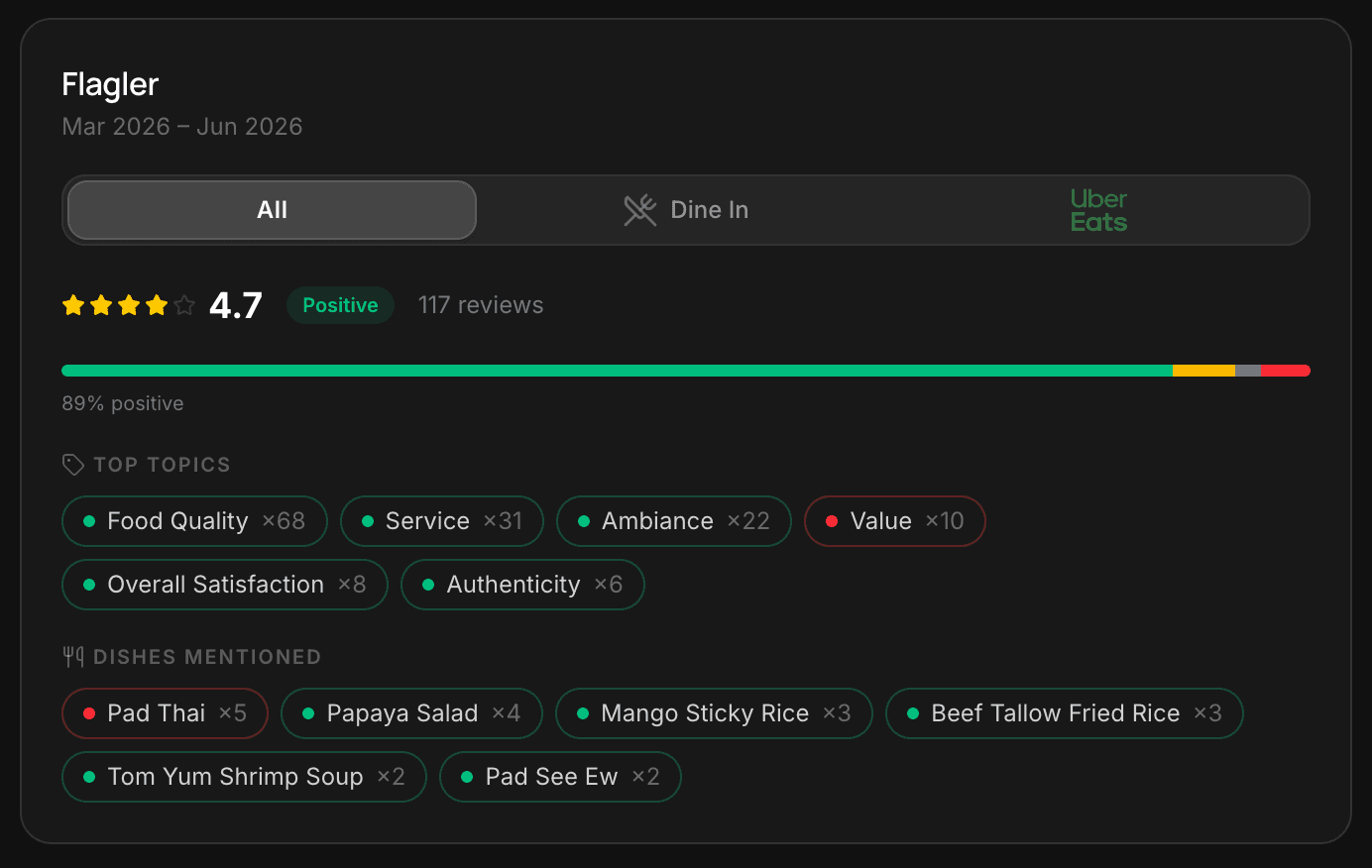
Location-level review intelligence · Flagler
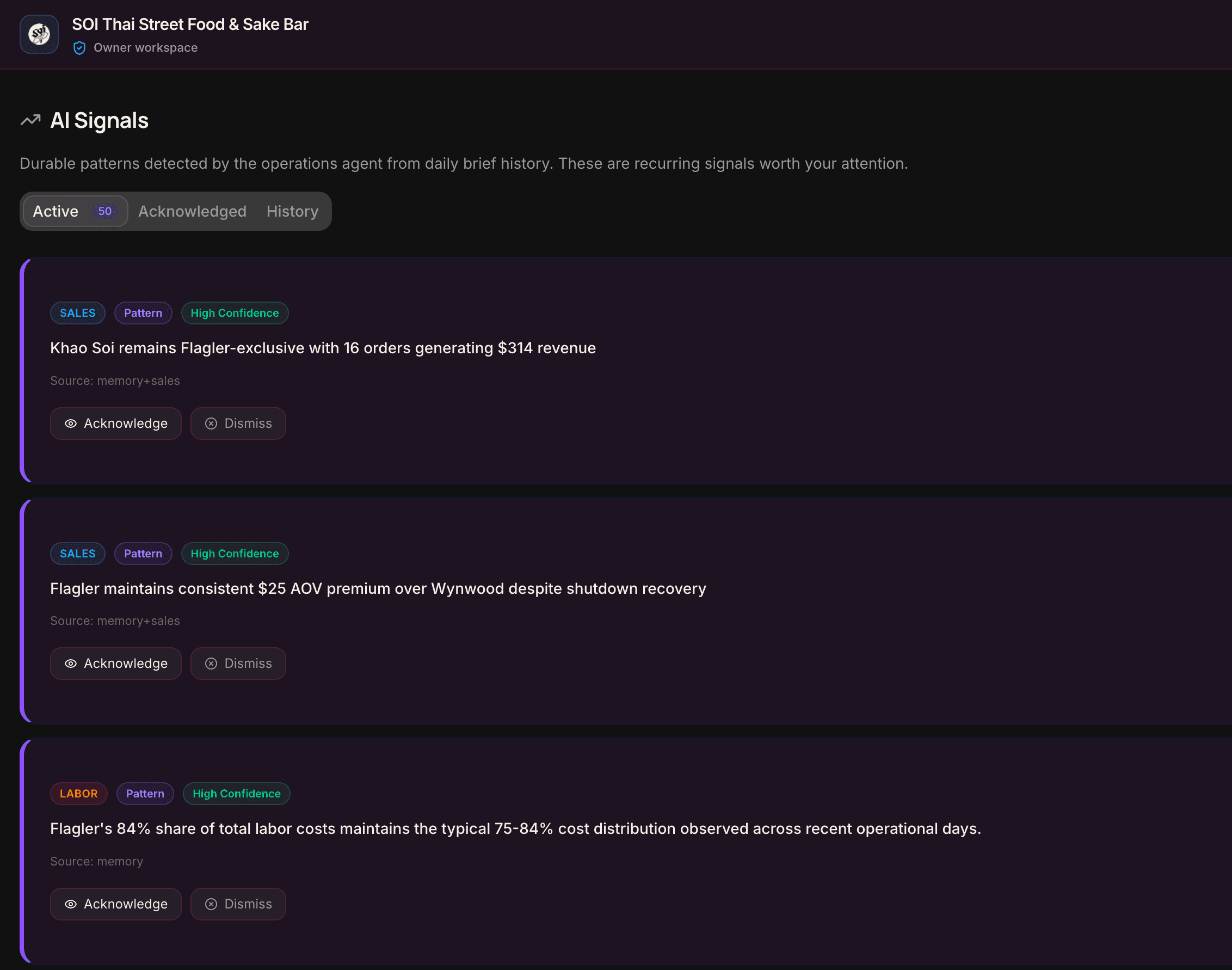
AI Signals · durable patterns from the operations agent
Durable patterns surface before the morning brief
The operations agent watches the operating layer continuously. Signals come with provenance, confidence, and source — and route into an acknowledge / dismiss workflow the owner can govern, not a feed they have to chase.
Compose new signals from business objects
Restaurant OS is not just six modules. It is a substrate of business objects — SalesTransaction, LaborSummary, CompensationPlan, Channel — and the operations and functions to compose new signals from them. Operators do not wait for a feature release to ask a new question.
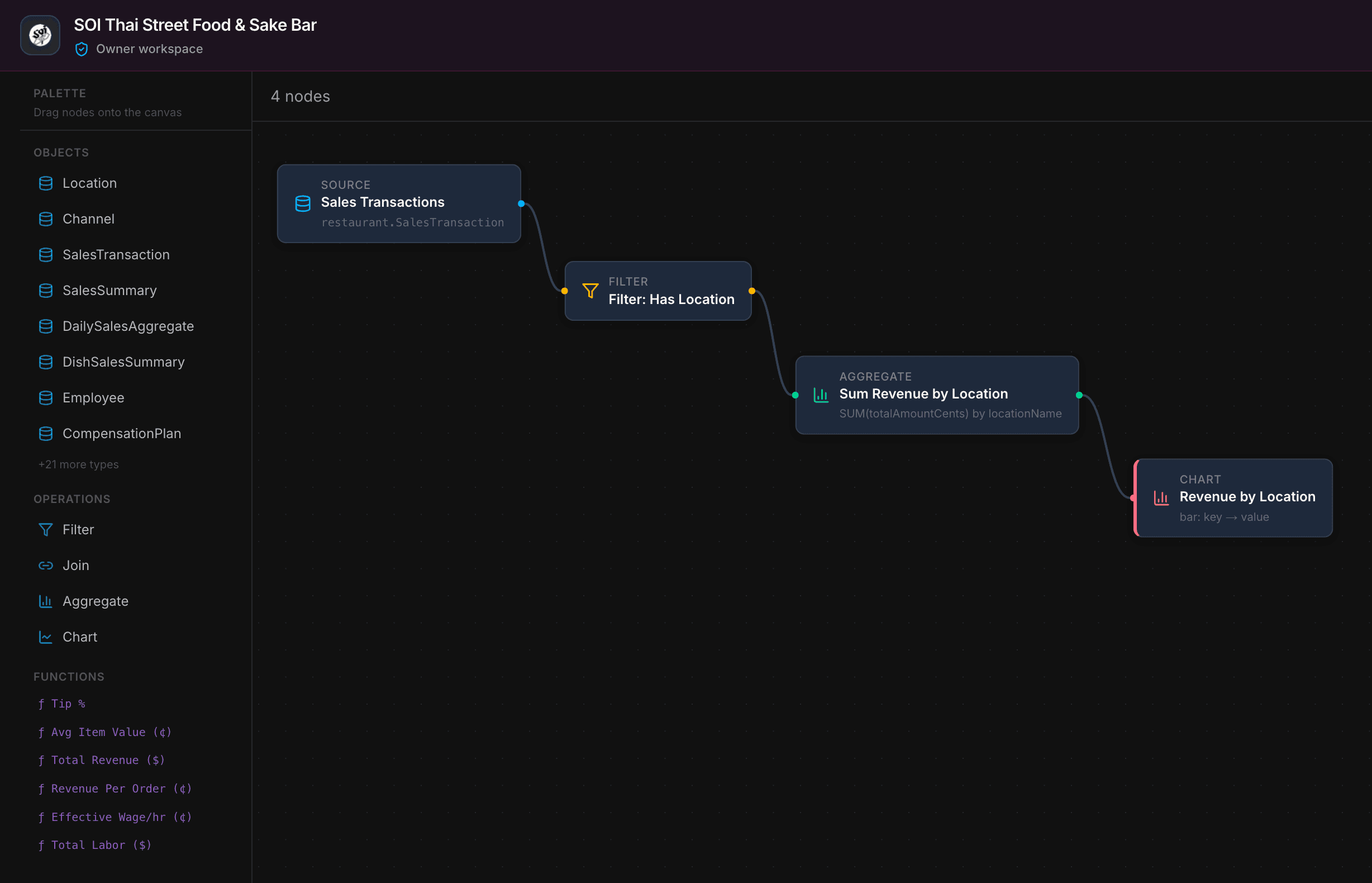
Composing 'Revenue by Location' from the object model
Powered by primitives every LWIS pack inherits
Every workflow in Restaurant OS lands on the same governed substrate. These primitives are not separate products — they show up the moment any pack is installed.
Approval Queue
Routes sensitive AI-assisted actions through the right operator with context and auditability.
Open primitiveOperator Brief
Pulls the day's signals into one governed brief with exceptions, actions, and what changed.
Open primitiveException Management
The shared queue for everything that needs a human — with state, ownership, and resolution evidence.
Open primitive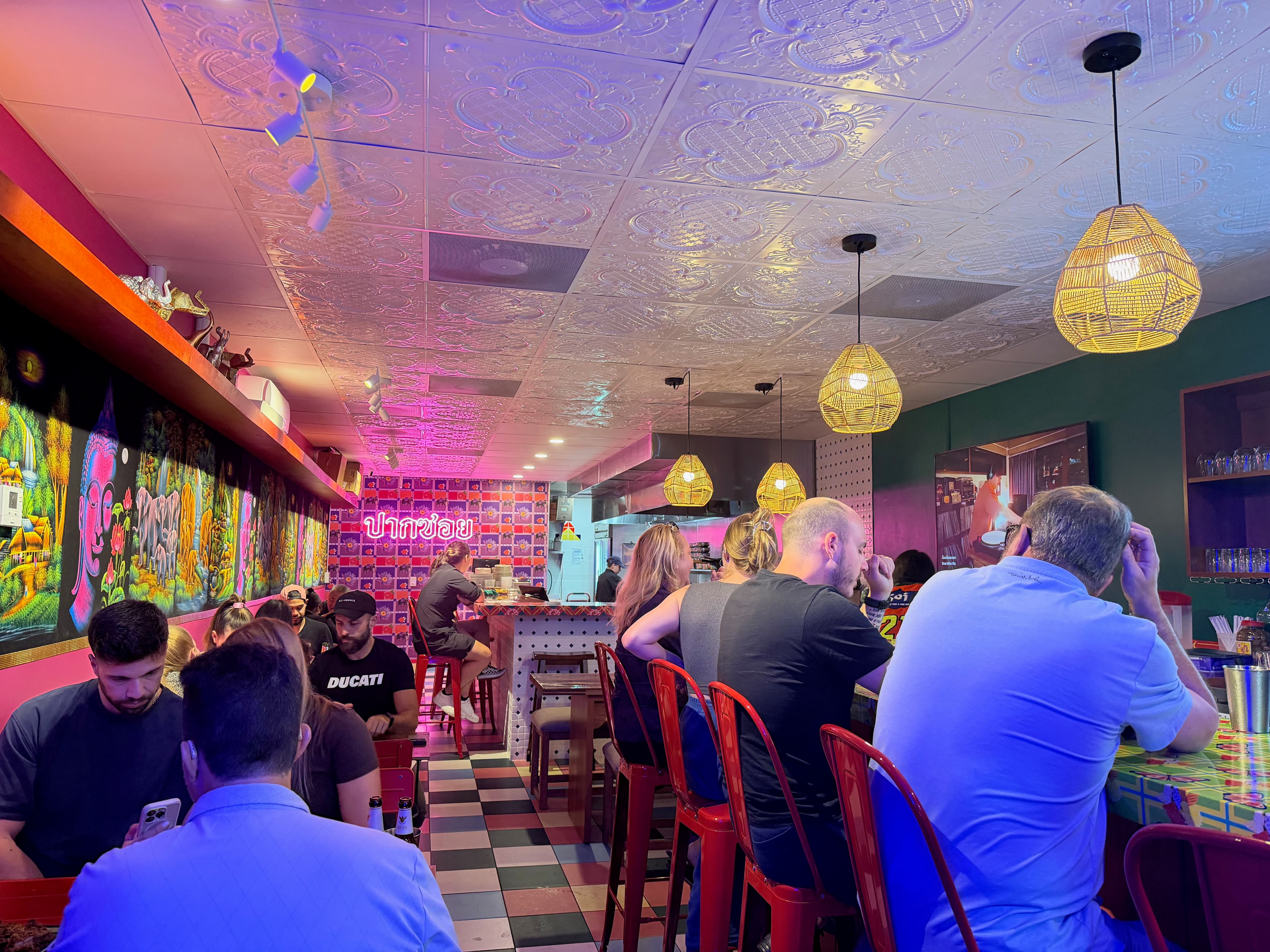
Run your restaurant on the operating layer SOI runs on
A Restaurant Proof Sprint defines the workflow scope, the systems involved, and the control model before anything goes live. Sprint scope determines which modules ship for your operation — no two restaurants run the same shape.